More info: The course is ran by B’ham Metropolitan College at the Botanical Gardens – the course involves; boundary habitat conservation, ecological surveys and techniques, ecology of trees, woods and forests, game management and environmental studies.
Finally! I’ve managed a blog on the actually day! Well it’s night now, but you know what I mean! 😄
06/06/16
The weather was gorgeous today – so on my way back from my parents, I decided to film a stretch of road I grew up near (using my phone); showing off the fields, trees and farmland I used to explore and play around, thus showing how Green Birmingham is! I still enjoy a good walk around there, passing from the Suburb into the Country, and there are parts of it still left to be explored by me. 💚
I love the Greenbelt in my feature image and my video below – if houses are ever built there, it would surely break my heart… 💔 Just the thought of it makes me extremely upset… Anyway! There’s a meadow, which you see a bit of (it has the Oak Tree almost in the middle) – I have seen a few of my first ever Butterflies in that very field!
I should also mention; the video features a bit of road I filmed last night too…
I have been working most of the first few days of June, so I’ve opted for easy Acts of Wildness (I have had no choice really) for my 30 Days Wild ‘challenges’. They are still enjoyable mind! I particularly enjoyed Encourage wild at work, because it made me bring nature into the work place – more specifically; the staff canteen! 💚
So what did I do? Well, on my lunch break I put the Springwatch Webcams on the TV, it happened to be adorable Little Owls which were on screen. 😃
Sophie, my colleague and friend, showed some interest and happily sat down in front of the TV:
I had work today at 7AM and finished around 2.30PM. Due to that and wanting to blog about what I’d do today, I needed something easy for my Act of Wildness. So of course, I was very pleased that I changed my usual route to work (as I needed to grab breakfast), because I ended up walking passed the Mini-Meadows in the video below!
I ran back after realising what I had saw! And then stood there watching a couple of bees (unsure which ones now) buzzing about the various flowers for a minute – whilst listening to a Blackcap singing in the background! 😃 When I got phone out to film, the bees had flown off, naturally! They must have been camera-shy 🐝 Unfortunately the sound didn’t record (I have a new phone and have sorted out the problem now), but luckily YouTube have provided a lovely soundtrack.
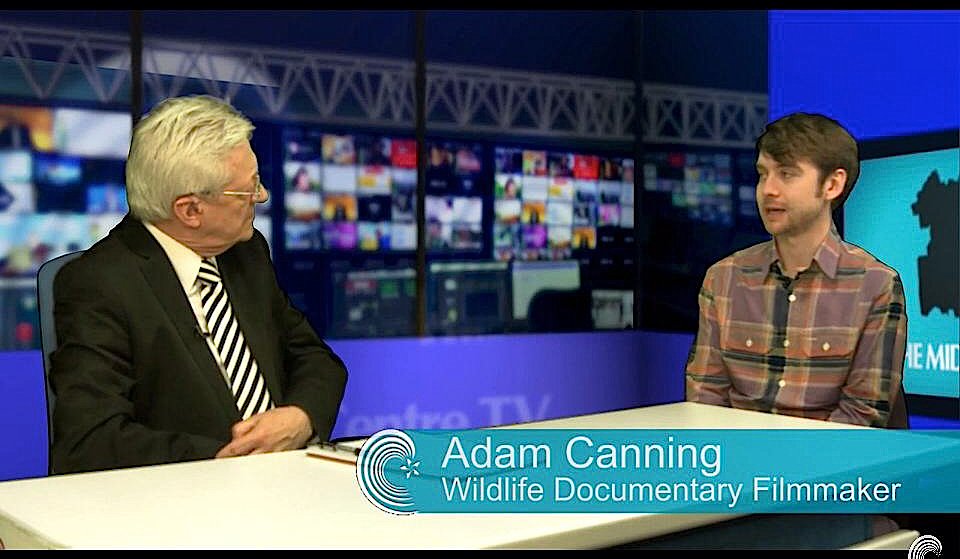
I should hopefully be making a series of short videos very soon, for Big Centre TV. The series will be entitled Wild West (Midlands) and it will showcase the greenspaces, wildlife and naturalists that are in and around the West Midlands.
To introduce me to their audience they asked me to come in on the 24th for a live studio interview, to discuss what families in the West Midlands can get up to this Easter Holiday, surveys and seasonal wildlife.
This month I’ve decided to focus on some wildlife that takes a backseat, and is often overlooked – Reptiles and Amphibians! 🐍 🐸
ARG UK have teamed up with Amphibian and Reptile Conservation; to bring us a Record Pool of our water loving and sun loving friends! In the video below I interview Underwater Cameraman, Jack Perks – to give us some tips and the lowdown on this nationwide survey.
If you’ve not seen or heard of Wildlife Monthly;click here.
This month’s instalment features one of our large feathery winter visitors from the high Arctic; the Bewick’s Swan. Part of the “Wild Swans” family, they’re not sedentary but are free-roaming and make a lot more noise than Mute Swans do – with their load trumpeting calls which often mark their arrival. They are also famously known for their individual black and yellow beak markings – allowing each bird to be identified and studied, which the staff at WWT Slimbridge in Gloucestershire, have been doing since the 1960’s. They’re named after the celebrated bird illustrator, Thomas Bewick – and funnily enough, the yellow on a Bewick’s Swan’s beak forms the letter B!
To see my video on the Whooper Swan (another member of the Wild Swan family) click here.
Wildlife Monthly – my seasonal video guide to British wildlife – is back! 😃
It has been 5 whole years since my first ever episode! There were two series in total, which Reader’s Digest Magazine featured on their website, with the last episodes being uploaded at the end of May 2012. Each month I produced 3 videos around a minute or more, detailing flora and fauna (mainly fauna) for you to look out for; be it in your garden, local park/reserve or further afield.
The idea this year, if all goes to plan, is to produce a single video per month, following that same criteria. Episode 1 of 2016’s Wildlife Monthly is in support of the RSPB’s Big Garden Birdwatch, in which I made some pink bird food. It was filmed at Moseley Old Hall – National Trust, which is in located on the boarder of South Staffordshire and Wolverhampton – where for the day, I was Lord of the Manor. 😉
Red Fat Balls and Lard Cake Recipe:
250g Lard (I used dripping, it’s fine to use suet and vegetable fat)
150g Sunflower Hearts
100g Crushed Peanuts
50g Porridge Oats
1 Red Gel Food Colour (Dr. Oetker)
Doubtless you’ll be doing yours in a kitchen!
Crush the Peanuts with a pestle and mortar, or put them between a tea-towel and whack them with a rolling-pin.
You don’t want to deep-fry the food, so just melt your chosen fat on a low-to-medium heat/flame.
(Add everything to the lard and mix together) Turn your heat right down. When everything is mixed together, line a small cuboid container with either grease-proof paper or clingfilm, fill it with the mixture halfway and pop it into the fridge – to set for an hour – creating your Lard Cake.
Pop the rest of the mixture into the fridge for approx. 45 minutes, stirring every few minutes initially, so when it comes to making the mixture into balls it’s at the right consistency.
Roll the mixture into fatballs – you should get approx. 6 in total.
The rest is self-explantory/can be gathered from my video above…
The breeding population of Goldfinches has risen by approx. 91% in recent years, and in Ireland the increase was around 158%! The British Trust for Ornithology has launched a survey to determine what is attracting these fabulous finches to our gardens. — BTO.org/Goldfinch-Survey
It’s estimated that since the 70’s we have lost 6 million House Sparrows! However, I’m proud to write; in Birmingham they are in good numbers! Along with Devon and Dorset, bucking the trend. 😊
UPDATE:
These are the results from my Garden Birdwatch (31/01/2016)
To catch up on pervious episodes of Wildlife Monthly, click here.
Longbridge, in South Birmingham – the birth place and former home of Rover – has a new High Street and Green Space! It’s on the site of where the said factory used to be. The River Rea that runs through the area has had a habitat and Green Space created around it, and it’s pretty much established and looking lush now! 😀
Today I explored it after purchasing Father’s Day gifts (with my trusty mobile to hand for snaps and clips).
The car park of the newly located Bournville College, with Green Space along side it, some of the old Rover site on the other side.
People and nature co-existing beautifully.
I saw a Grey Wagtail (which have some yellow feathers) down there to left of where the lad on the bike was. The video below isn’t great but you can hear it calling 😛
The middle of the new Green Space, looking towards the chap on the bike. This is the bridge you see in the distance.
Where this newly created habitat ends.
I was really pleased that this new place is now a good feeding area for House Martins, there were quite a few wizzing and swooping around 🙂
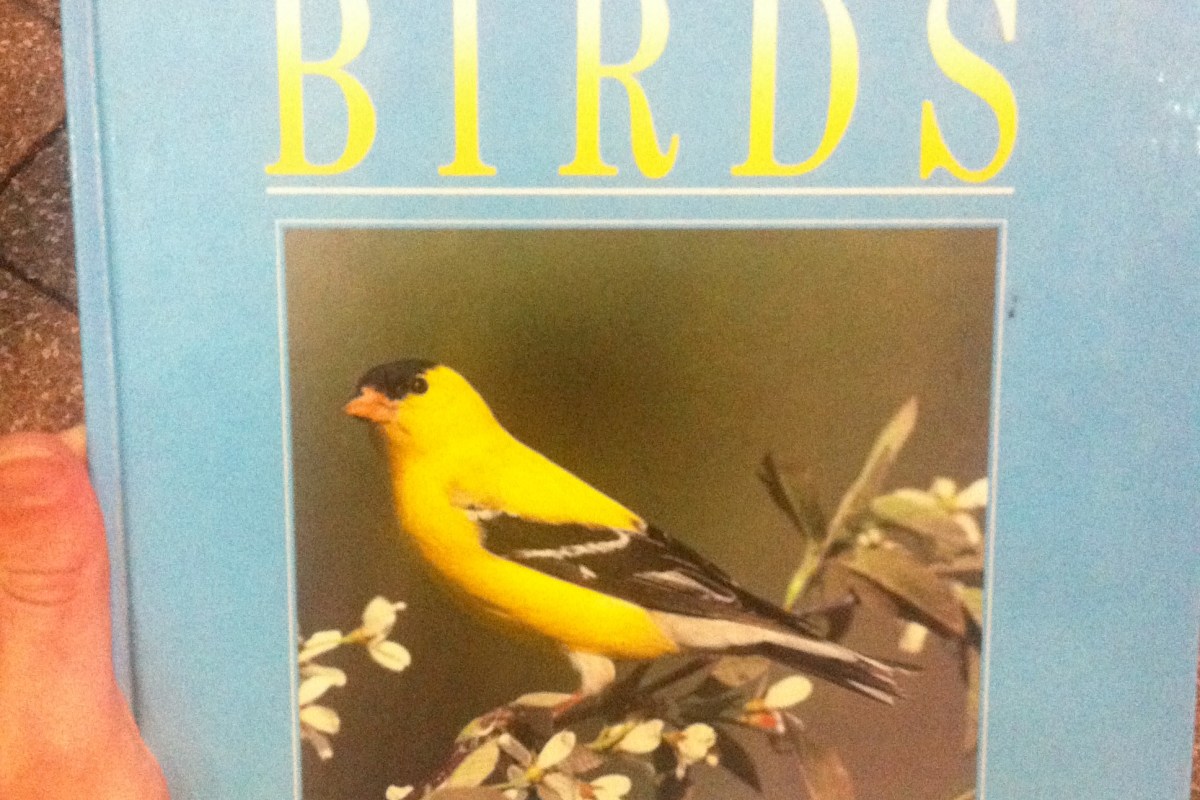
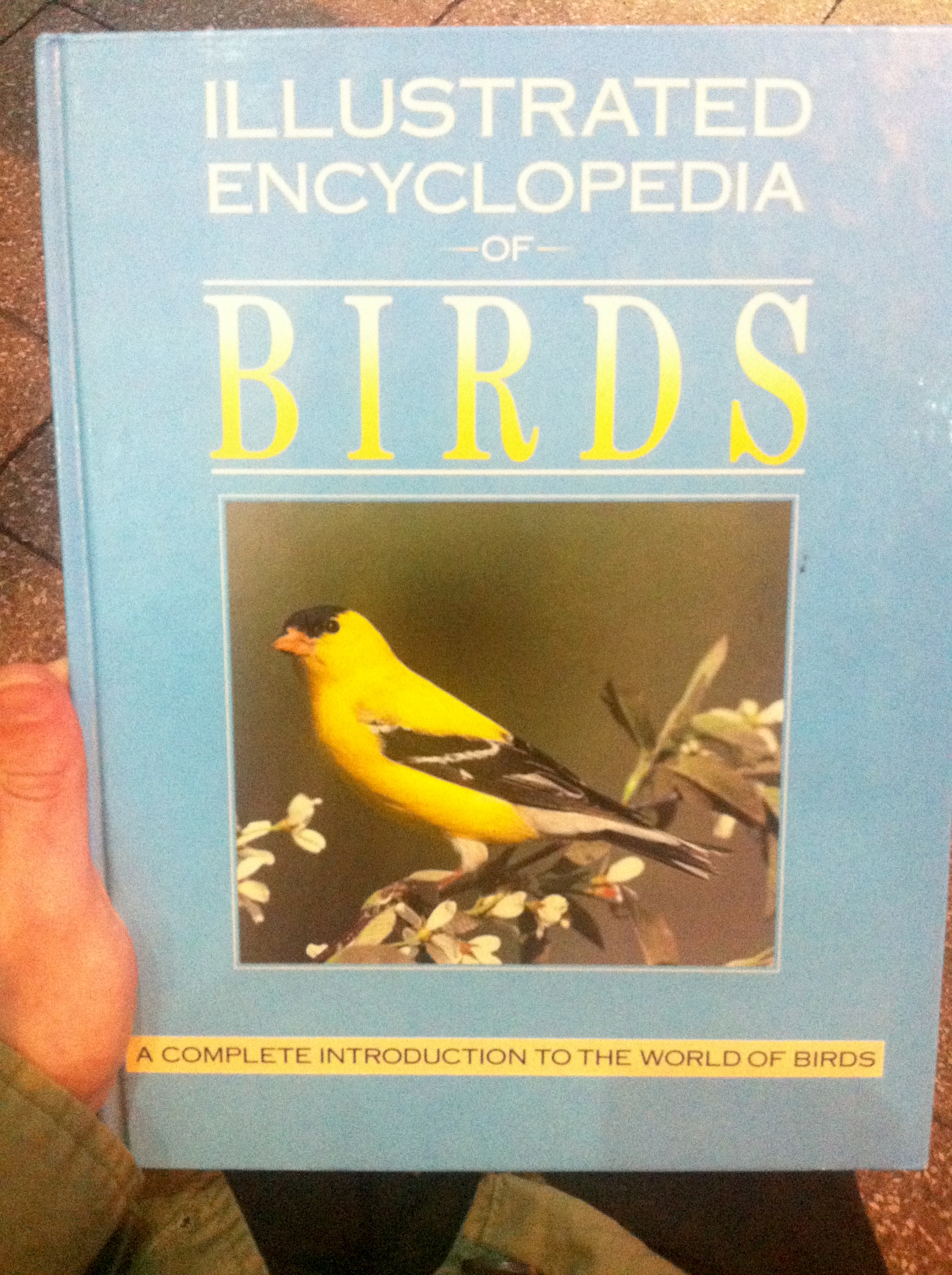
#30DaysWIldToday I was sorting out the blog for yesterdays Random Act of Wildness – “Admire the setting Sun”, it was raining and I had work later. I wasn’t really left with many options, due to the constraints (time and weather). So, I chose to read a non-fiction book on the bus to work (wildlife related of course).
Refreshing my knowledge and filling in any gaps. The bird on the front of the book is an American Goldfinch, it’s just a funky Siskin to us Brits 😛 I really like the first two paragraphs in the introduction for Section One of the book, so I’ve quoted them below:
Birds are not only one of the most successful groups in the animal kingdom but they hold a special position in our awareness of the natural world. They are often the most obvious living creatures in a landscape (their apparent confidence borne of an ability to fly to safety) and their bright colours and melodic songs have long been admired by man. Yet it is only recently that we have begun to fully appreciate just how intricate their lives are.
The 8000 or so species of birds have evolved over millions of years and have adapted to many different modes of life. If one was to take a single feature which places the birds apart from all other animals it would be the development of feathers. These complex and delicate structures not only make flight possible but also serve many other functions, notably providing insulation from cold or wet and furnishing attractive or eye-catching plumages for use in courtship and territorial rituals.
Such great facts! ❤ What a top way to introduce readers to a book all about birds.
I have to stop myself from quoting more paragraphs, so I’ll just quote one more. From the top of page 8:
Birds have lived on earth for far longer than man or any of the mammals. When giant dinosaurs roamed the world, there were already many kinds of birds inhabiting the forests, and wetlands and the marine environment. They included some types which we would recognise today, such as grebes, herons and waterfowl. In fact, it seems that birds are probably descended from small dinosaurs called coelurosaurs which ran standing up on their hind legs and balancing with their tails, much as birds do today. Compsognathus is a typical coelurosaur.
This book was published in 1989 by The Hamlyn Publishing Group Limited. It has 3 sections in all; Biology of Birds, Bird Habitats of the World and Bird Families of the World – covering all aspects. It has a mixture of stills and illustrations, I think it’s a brilliant book.








 Canned Wildlife
You must be logged in to post a comment.