I had work today at 7AM and finished around 2.30PM. Due to that and wanting to blog about what I’d do today, I needed something easy for my Act of Wildness. So of course, I was very pleased that I changed my usual route to work (as I needed to grab breakfast), because I ended up walking passed the Mini-Meadows in the video below!
I ran back after realising what I had saw! And then stood there watching a couple of bees (unsure which ones now) buzzing about the various flowers for a minute – whilst listening to a Blackcap singing in the background! 😃 When I got phone out to film, the bees had flown off, naturally! They must have been camera-shy 🐝 Unfortunately the sound didn’t record (I have a new phone and have sorted out the problem now), but luckily YouTube have provided a lovely soundtrack.
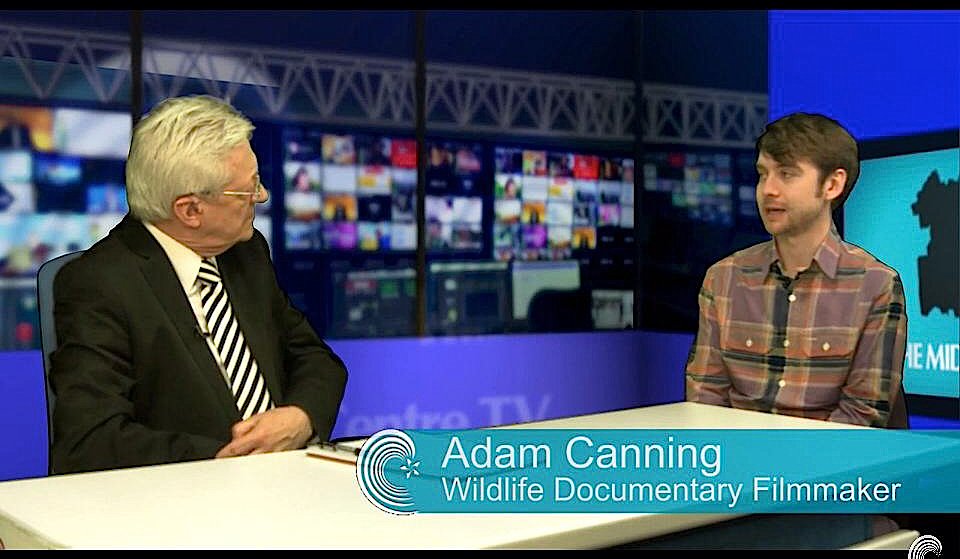
I should hopefully be making a series of short videos very soon, for Big Centre TV. The series will be entitled Wild West (Midlands) and it will showcase the greenspaces, wildlife and naturalists that are in and around the West Midlands.
To introduce me to their audience they asked me to come in on the 24th for a live studio interview, to discuss what families in the West Midlands can get up to this Easter Holiday, surveys and seasonal wildlife.
This month I’ve decided to focus on some wildlife that takes a backseat, and is often overlooked – Reptiles and Amphibians! 🐍 🐸
ARG UK have teamed up with Amphibian and Reptile Conservation; to bring us a Record Pool of our water loving and sun loving friends! In the video below I interview Underwater Cameraman, Jack Perks – to give us some tips and the lowdown on this nationwide survey.
If you’ve not seen or heard of Wildlife Monthly;click here.
This month’s instalment features one of our large feathery winter visitors from the high Arctic; the Bewick’s Swan. Part of the “Wild Swans” family, they’re not sedentary but are free-roaming and make a lot more noise than Mute Swans do – with their load trumpeting calls which often mark their arrival. They are also famously known for their individual black and yellow beak markings – allowing each bird to be identified and studied, which the staff at WWT Slimbridge in Gloucestershire, have been doing since the 1960’s. They’re named after the celebrated bird illustrator, Thomas Bewick – and funnily enough, the yellow on a Bewick’s Swan’s beak forms the letter B!
To see my video on the Whooper Swan (another member of the Wild Swan family) click here.
Wildlife Monthly – my seasonal video guide to British wildlife – is back! 😃
It has been 5 whole years since my first ever episode! There were two series in total, which Reader’s Digest Magazine featured on their website, with the last episodes being uploaded at the end of May 2012. Each month I produced 3 videos around a minute or more, detailing flora and fauna (mainly fauna) for you to look out for; be it in your garden, local park/reserve or further afield.
The idea this year, if all goes to plan, is to produce a single video per month, following that same criteria. Episode 1 of 2016’s Wildlife Monthly is in support of the RSPB’s Big Garden Birdwatch, in which I made some pink bird food. It was filmed at Moseley Old Hall – National Trust, which is in located on the boarder of South Staffordshire and Wolverhampton – where for the day, I was Lord of the Manor. 😉
Red Fat Balls and Lard Cake Recipe:
250g Lard (I used dripping, it’s fine to use suet and vegetable fat)
150g Sunflower Hearts
100g Crushed Peanuts
50g Porridge Oats
1 Red Gel Food Colour (Dr. Oetker)
Doubtless you’ll be doing yours in a kitchen!
Crush the Peanuts with a pestle and mortar, or put them between a tea-towel and whack them with a rolling-pin.
You don’t want to deep-fry the food, so just melt your chosen fat on a low-to-medium heat/flame.
(Add everything to the lard and mix together) Turn your heat right down. When everything is mixed together, line a small cuboid container with either grease-proof paper or clingfilm, fill it with the mixture halfway and pop it into the fridge – to set for an hour – creating your Lard Cake.
Pop the rest of the mixture into the fridge for approx. 45 minutes, stirring every few minutes initially, so when it comes to making the mixture into balls it’s at the right consistency.
Roll the mixture into fatballs – you should get approx. 6 in total.
The rest is self-explantory/can be gathered from my video above…
The breeding population of Goldfinches has risen by approx. 91% in recent years, and in Ireland the increase was around 158%! The British Trust for Ornithology has launched a survey to determine what is attracting these fabulous finches to our gardens. — BTO.org/Goldfinch-Survey
It’s estimated that since the 70’s we have lost 6 million House Sparrows! However, I’m proud to write; in Birmingham they are in good numbers! Along with Devon and Dorset, bucking the trend. 😊
UPDATE:
These are the results from my Garden Birdwatch (31/01/2016)
To catch up on pervious episodes of Wildlife Monthly, click here.
I had a realisation recently, regarding the invertebrates I blogged about back in June… I’ll bee honest 😉 I didn’t think about what the Ruby-tailed Wasp may have been up to, but I was reminded in the September Issue of BBC Wildlife magazine – that they’re a kind of Cuckoo! This jewel-like wasp, happened to be close to where the Mason Wasp was coming and going from!
I only have this poor photo of these amazing Apocrita:
These weeny wasps (with metallic blue/turquoise tops and ruby red bottoms) lay their eggs in the nests of other Solitary Wasps, like the Mason Wasp!
When lava of the Ruby-tailed Wasp hatches, it eats the egg or grub of the host’s nest – which makes these sort of Wasps parasitoid (because they don’t live inside the host, they kill them instead). September’s issue of BBC Wildlife also features “7 WAYS TO SAVE SOLITARY BEES”.
“The Annual Rutland Romp!” ?? I’m referring to the British Birdwatching Fair, the Birdfair of course! 🙂 Last week was my 5th time at the fair (I’ve been going every year since 2010). It’s on for 3 days over a weekend in mid August, and has been on every year for more than 25 years! I love that it’s not just people from all over Britain visiting Rutland Water, but people from all over the world that migrate to England’s smallest county for this annual and eventful occasion too!
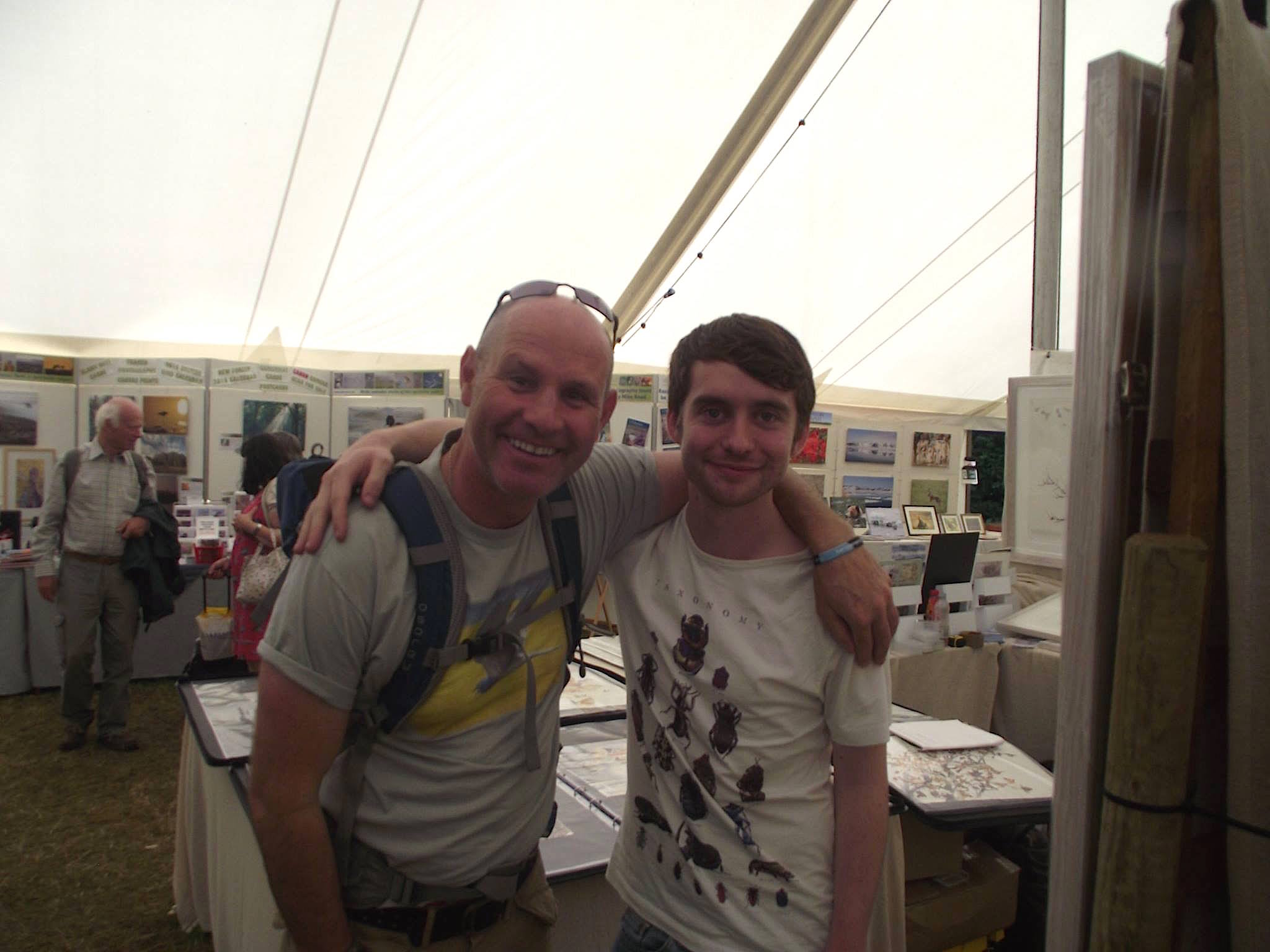
Birdfair 2010 – Me and Simon King OBE
Over the years – despite its name – Birdfair has evolved to not just be about birds and aiding their conservation, but wildlife and conservation overall. I often refer to it as a wildlife festival before telling people the name of it. It is an amazing place to meet and be surrounded by like-minded passionate people, and rub shoulders with TV personalities 😉 There are talks from wildlife TV presenters, naturalists, conservationists and filmmakers, as well as authors and photographers too. I could only do two days of the fair and arrived on Saturday, with my wildlife photographer friend, James Burman – who has taken some stunning pictures. We camped at Rutland Water Camping, on the lovely Hambleton Peninsula – where we saw Foxes and a Badger 🙂
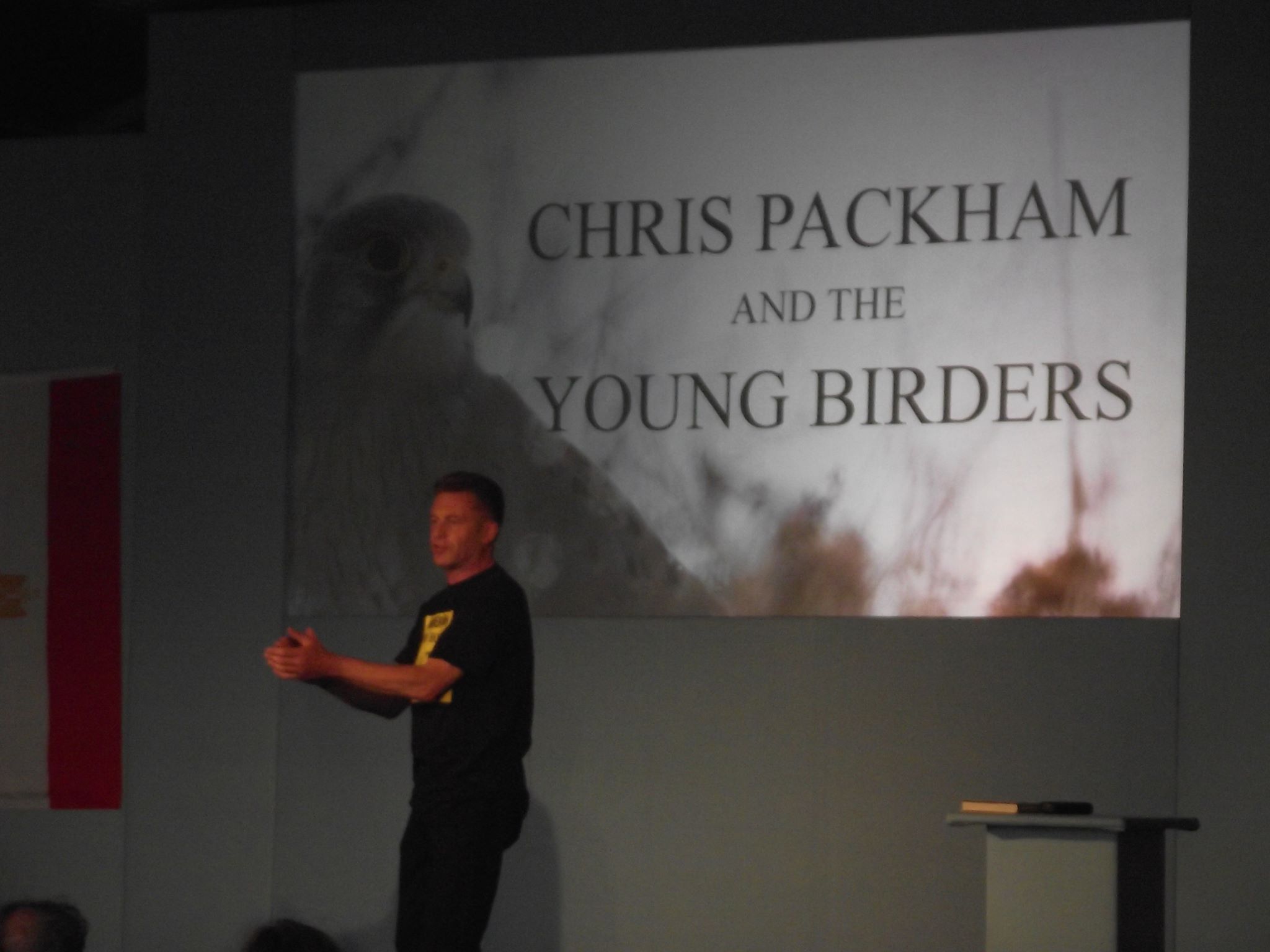
Chris Packham’s talk was brilliant – in short; it was about cutting the crap regarding what dangers children might face outdoors, and to let them experience and enjoy nature in all its glory! Chris featured three young wildlife enthusiasts, who in turn talked about their experiences and passion for nature, and what they have been up to. I realised they each represented a region of England: Josie Hewitt – The South, Connor Coombes – The North and Georgia Locock – The Midlands. All of their talks were very good, and insightful 🙂 I’m hoping this is a progressive change, as it’s really nice hearing from a diverse range of people on stage in the Events Marquee. Connor with his Cumbrian accent and Georgia with her West Midlands accent (similar to my own), I couldn’t help but be moved, it was refreshing and humbling!
In various other marquees you can find hundreds of stands selling and promoting the latest products for wildlife enthusiasts – gadgets and clothing, scopes to sculptures, binoculars to bird food and eGuides to eco-holidays! 😀 I mainly go to the festival to catch up with old friends and make new ones, and to share it all with them! ❤
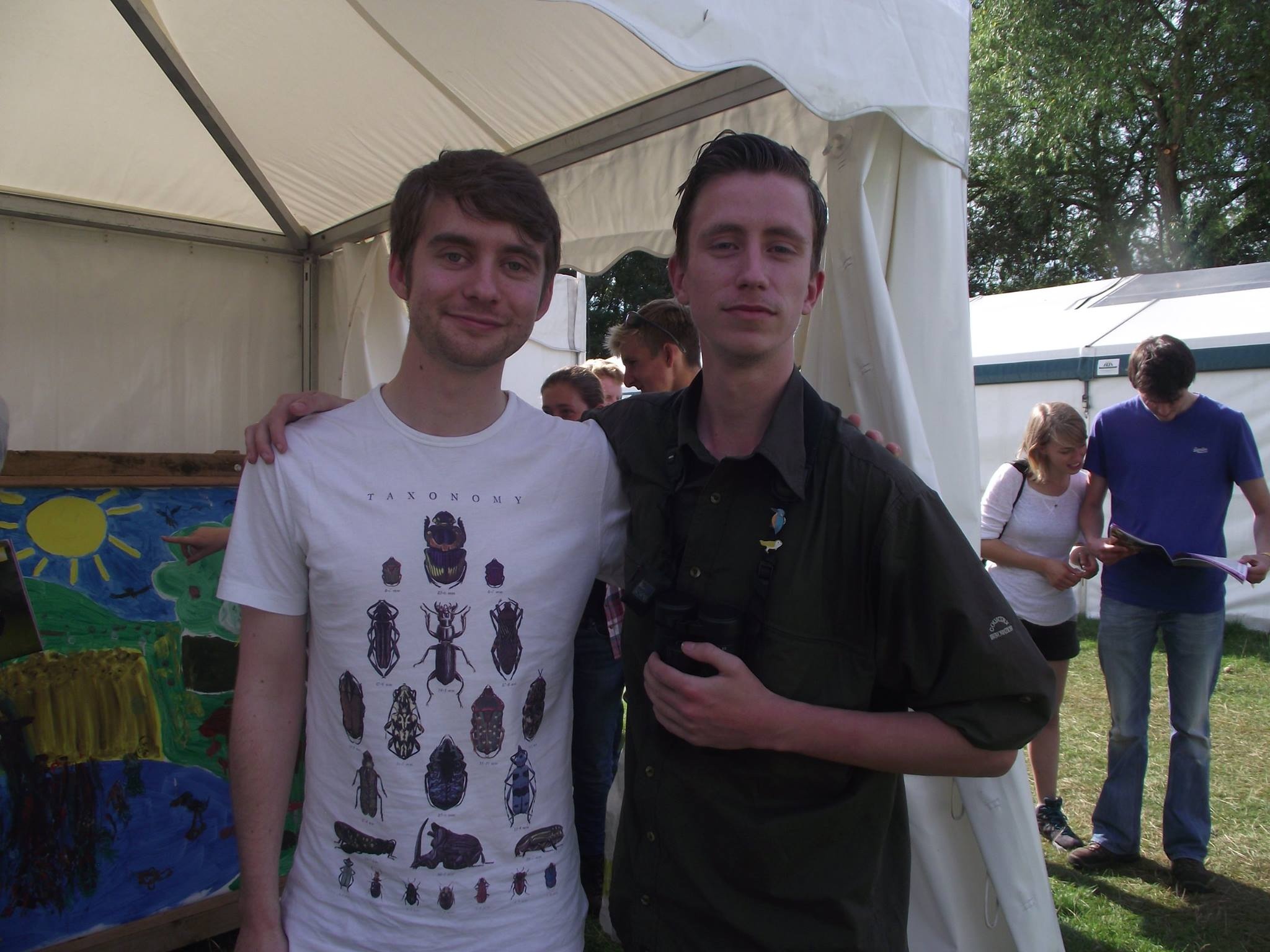
Birdfair 2015 – Me & James Burman (Alex & Gordon looking at the Birdfair programme) 🙂
Birdfair 2015 – Christine Hall and Me 😀
Since my 2nd time, I have met up with my friend Christine Hall, a great wildlife camerawoman, photographer and conservationist. It’s possible you’ve seen her video of a Red Squirrel on a previous series of Autumnwatch, it was slipping down a post whilst trying to get peanuts from a bird-feeder, and you may have recently seen her in the Springwatch Unsprung audience 😉
It was really good meeting Yusuf Akhtar, Victoria House and a mixture of AFON and NGB members (to name a few); Alexandra Hoadley, Ryan Clark, Susan Jones, Josie Hewitt, James Common, Georgia Locock, Drew Lyness, Billy Stockwell, Sorrel Lyall, Tom Mason and James O’Neill. Plus it was really nice catching up with Peter Cooper, Jack Perks, Josh Jaggard and Matt Collis 🙂
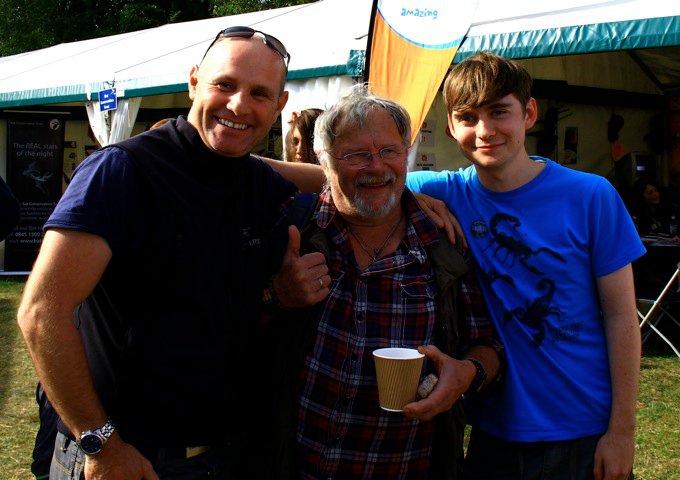
Birdfair 2011 – Mike Dilger, Bill Oddie OBE and Me!
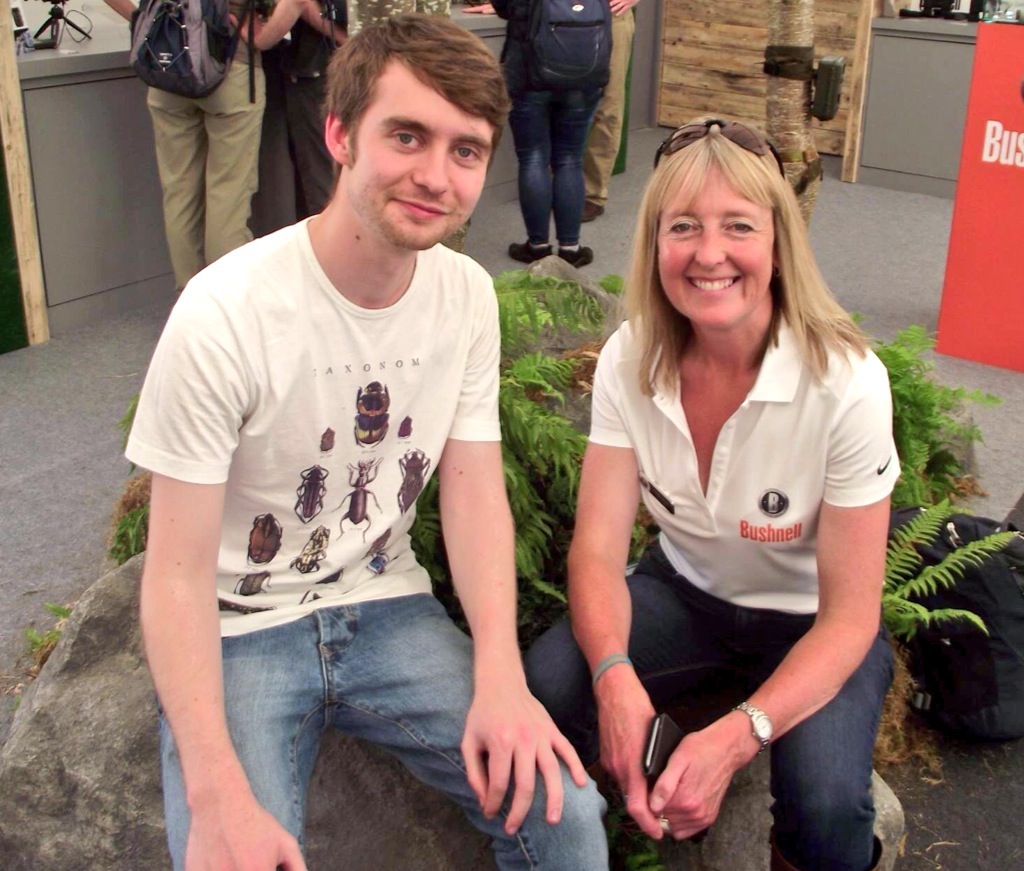
Birdfair 2015 – Me with Kate MacRae
Every year at the Bushnell stand I chat to WildlifeKate quite a lot, we came to realise we’ve never had a photo taken together, so the picture above is the only one ever for now 😛
Birdfair 2015 – Mike Dilger and Me
Mike Dilger and I chat quite a lot too, this year he bumped into me – in the Art Marquee – James and I happened to be getting to know the illustrator of his new book, Darren Woodhead – a wonderful artist. Mike’s new book is being released next year!
Simon King’s talk this year – as well as hearing about his recent wildlife filmmaking – contained a much needed reminder; a bit more needs to be done to conserve the natural world. We were made aware that nature is losing places in the dictionary! Words like Snowdrop are being taken out and replaced with the likes of “selfie” and “blog”. So I was pleased that towards the end of his talk we were informed about the Simon King Wildlife Project, which is a new charity assisting in the prevention of the degradation of the natural world, globally. The project intends to safeguard habitats, reclaim land for nature and engage people with wild creatures and wild places, which in turn will help keep the natural world intact! 🙂
Before my entry comes to an end – wildlife I observed around the reserve:
I chose the mystery location for yesterdays’ video, because I grew up a short walk away from it and was inspired by an episode of Countryfile where Anita Rani showcases rural Bradford 😛 Incase you’ve not seen the video, I’ll not ruin the ‘surprise’ with naming it. It’s where I cut my teeth as a child and naturalist, so to speak and over the years I’ve seen loads of wildlife there, a few firsts, which includes the time I saw my first Weasel as a child! Yesterday my friend Gary and I observed a Kestrel and Jay up there.
In the second shot of the intro to my video, I’m on the top of Rubery Hill/Cock Hill, with the Frankley countryside and suburb in the background, there are more great views from up there; the Lickey Hills, Rubery and Bromsgrove in the distance – plus the country park I reveal in my video 😉
When we were filming near Frankley Beeches wood, we heard and saw a beautiful male Yellowhammer – it’s the second time I’ve seen one in Frankley, (I’ve mainly distantly heard their song now and again) so I decided to record and feature this Yellowhammers’ song as the soundtrack for the video. We could also hear the beautiful song of the Skylark in the distance, down near Lower Hill Farm. On New Street, near the Greenbelt just before Frankley Hill Lane (which leads up to the Frankley Beeches Wood) I saw a partly Leucistic male Blackbird collecting worms, I almost mistook it for a Ring Ouzel!
Longbridge, in South Birmingham – the birth place and former home of Rover – has a new High Street and Green Space! It’s on the site of where the said factory used to be. The River Rea that runs through the area has had a habitat and Green Space created around it, and it’s pretty much established and looking lush now! 😀
Today I explored it after purchasing Father’s Day gifts (with my trusty mobile to hand for snaps and clips).
The car park of the newly located Bournville College, with Green Space along side it, some of the old Rover site on the other side.
People and nature co-existing beautifully.
I saw a Grey Wagtail (which have some yellow feathers) down there to left of where the lad on the bike was. The video below isn’t great but you can hear it calling 😛
The middle of the new Green Space, looking towards the chap on the bike. This is the bridge you see in the distance.
Where this newly created habitat ends.
I was really pleased that this new place is now a good feeding area for House Martins, there were quite a few wizzing and swooping around 🙂
#30DaysWildFor day 18, I decided I would take a picture of whatever caught my eye. The first thing that did, was a lovely Green Shield Bug! 🙂
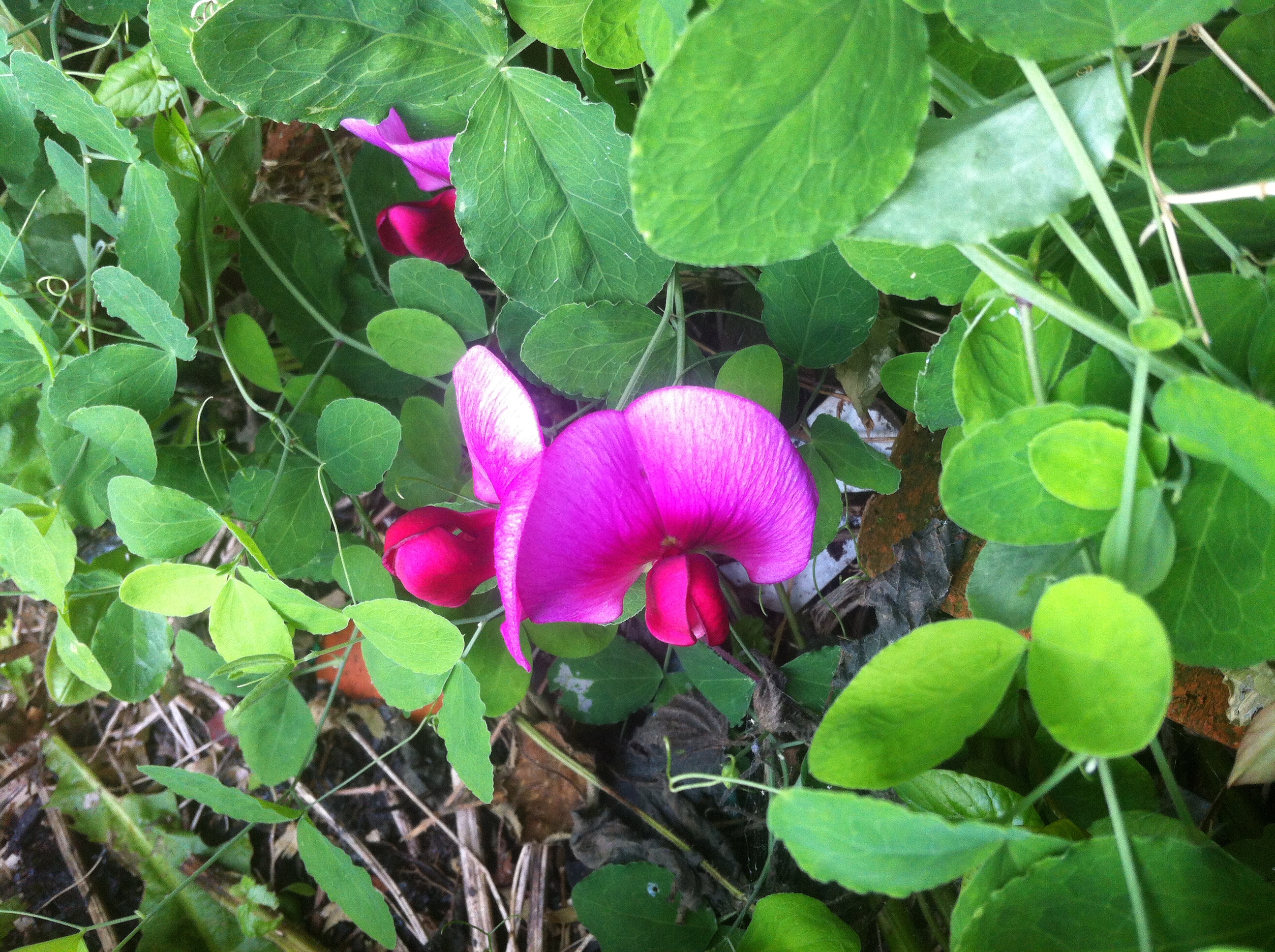
A Green Shield Bug perched on my parents livingroom window.Later I went to visit my friend Laura’s pet shop, CavyNoodle Pets UK – in a village called Rubery. The shop more or less has a Wildlife Garden out back, where various wildflowers pop up. The Sweet Pea below, stood out to me.
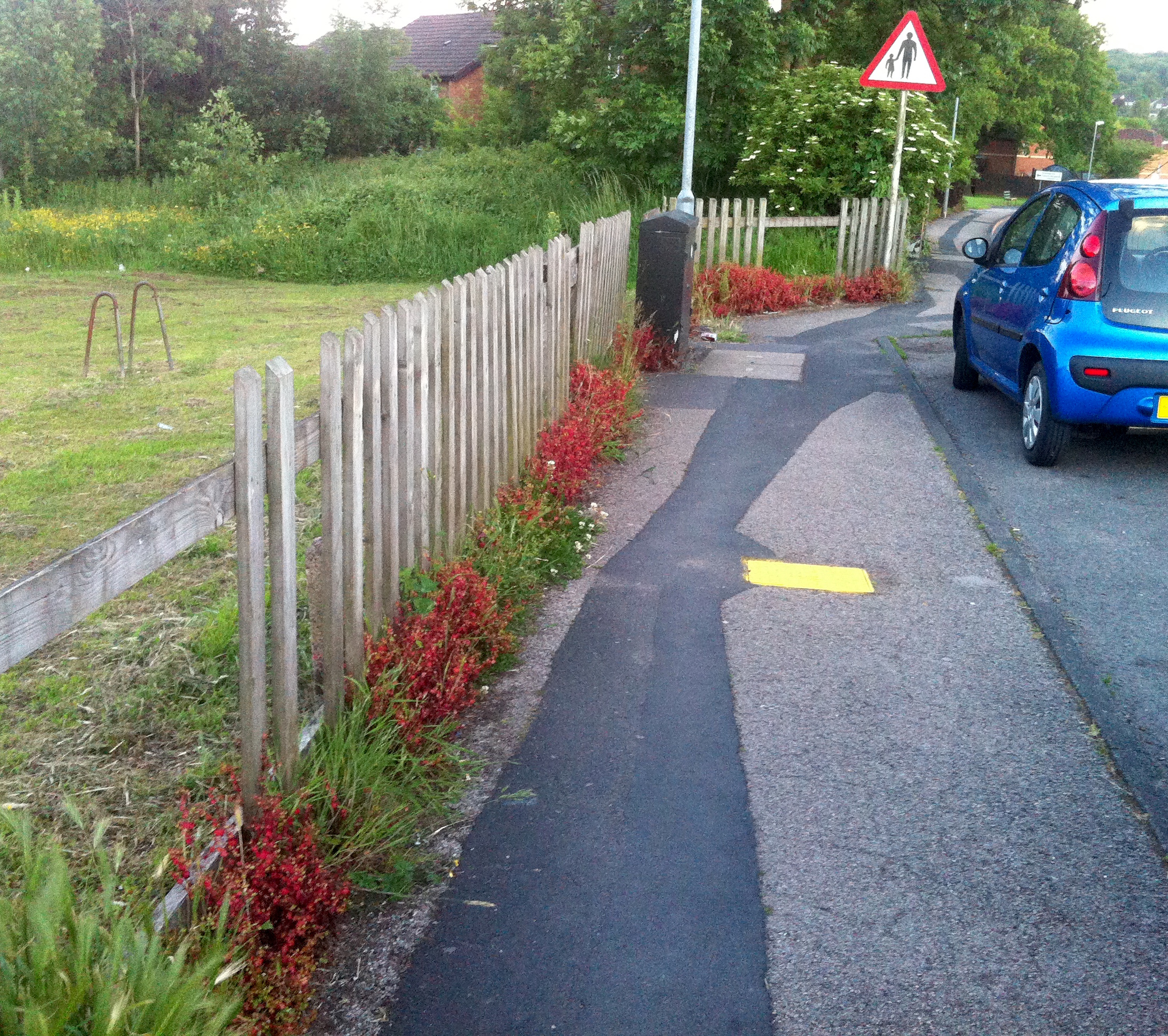
This Sweet Pea is growing wild, so its’ flowers and leaves are larger than the cultivated varieties.On the way back, I remembered the Shinning Cranesbill I passed on the walk down to Rubery was very red! So on my way back up, I snapped a couple pictures.
It’d be really cool, if this whole path was lined with red Shinning Cranesbill! A closer view for you.These particular plants are red in colour due to the dry weather – therefore are nutrient starved, shutting down/stopping chlorophyll production and going to seed quite early. The remaining sugars in the leaves give it its’ red pigment. In away, the sugars have caramelised 😀









 Canned Wildlife
You must be logged in to post a comment.