On Monday, whilst walking passed some Foxgloves with my Mom up the Waseley Hills Country Park, I remembered that we had some seeds at the back of one of the kitchen cupboards 😉


Thanks for visiting 🙂
Adam Ó Hare's natural history site!
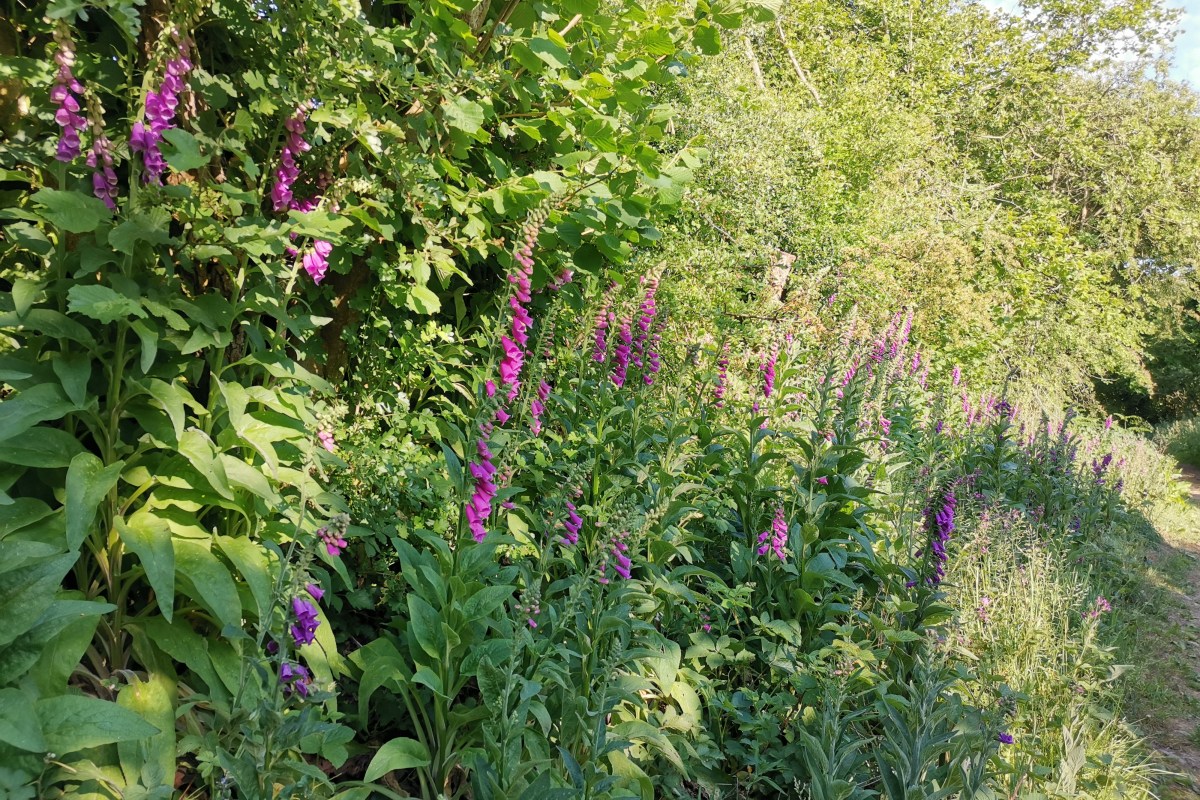
On Monday, whilst walking passed some Foxgloves with my Mom up the Waseley Hills Country Park, I remembered that we had some seeds at the back of one of the kitchen cupboards 😉
Thanks for visiting 🙂

It’s that time of year again! To do something nature related & connect with the natural world every day in June, a “Random Act of Wildness” – as suggested by The Wildlife Trusts.

This morning I got up at 4pm to listen to the Dawn Chorus 💚 🐦 🎶 (Then went back to sleep 😆).
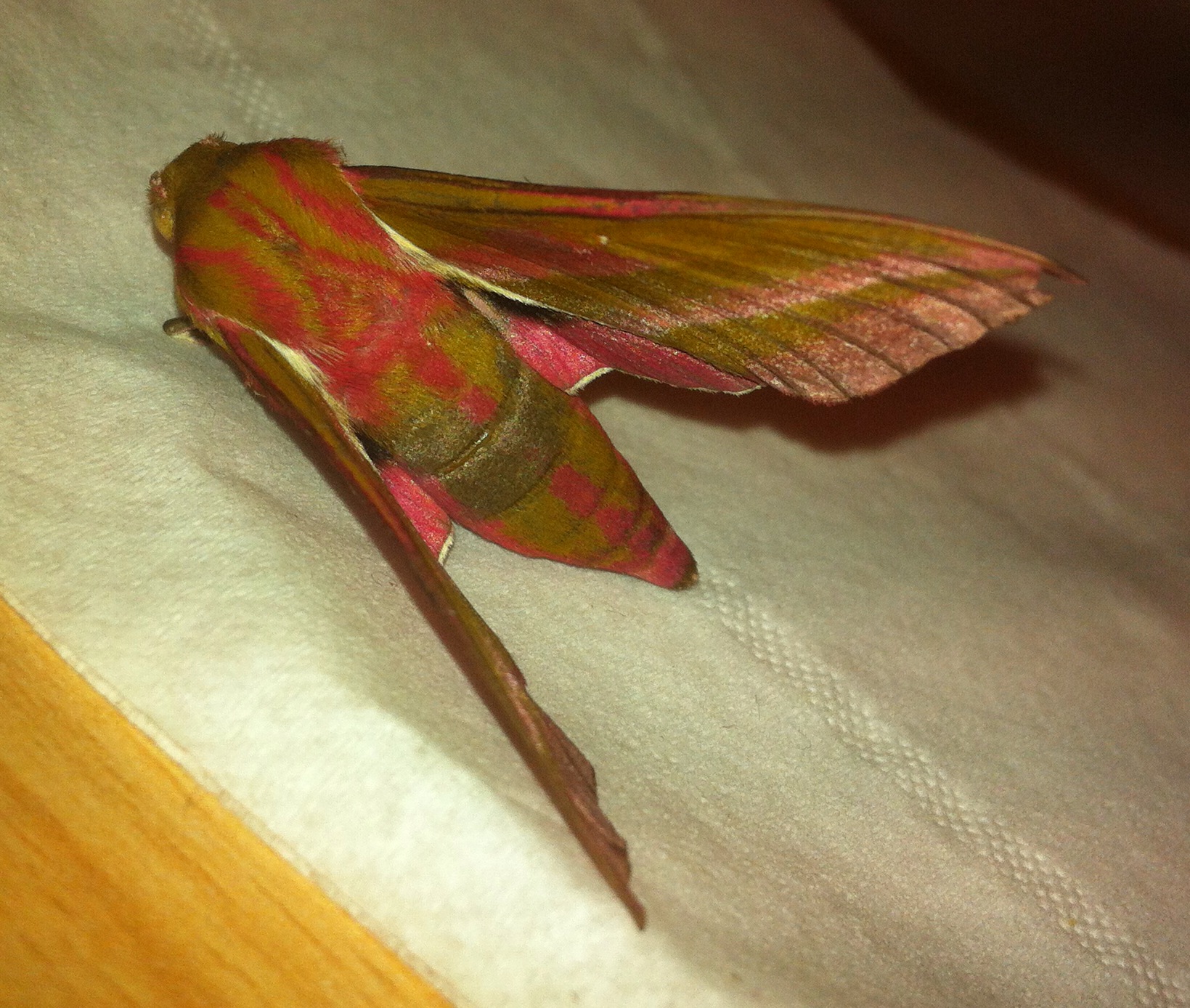
Yesterday I saw a lovely species of Moth in the Garden, for the first time, so I have included a video of that video too! 😀 🦋
In the early evening I went for a lovely walk with my Mom, around the Waseley Hills Country Park 🏞️ ❤️

Thanks for visiting! ☺️
A lot of birds are quieting down now, but Yellowhammers 🐤 are continuing to sing away! Plus this is another great month for seeing some beautiful Butterflies! 🦋
(The videos below were made a few years ago)
Thanks for visiting! 😊
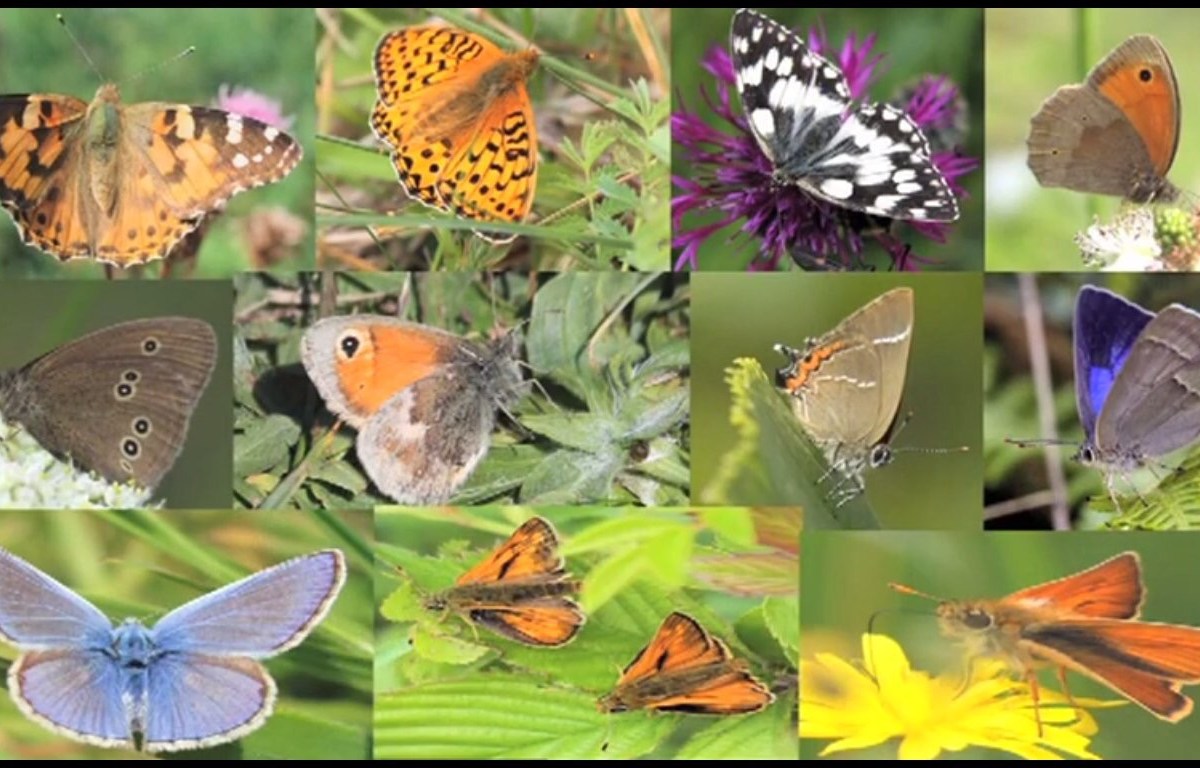
Summer is a great time to see Butterflies, thanks to Buddleja growing just about anywhere, you can see these beautiful creatures in urban places as well as suburban and rural.
Below are three short videos acting as a guide to the Butterflies of High Summer:
Thanks for visiting! 🙂

Last year I did separate videos of my interviews with the at gardening celebs / presenters and garden designers.
This year I thought it would be better to edit the interviews etc of the show, into one video and that’s exactly what I’ve done in the short video below:
You can see last years videos by clicking: here!
Thanks for visiting! 🙂
“Follow a bumblebee”
12/06/16
After work, I decided to go for a nice stroll with a colleague and friend, Sophie. We sauntered around the semi-rural outskirts of Northfield Town Centre (in South Birmingham).
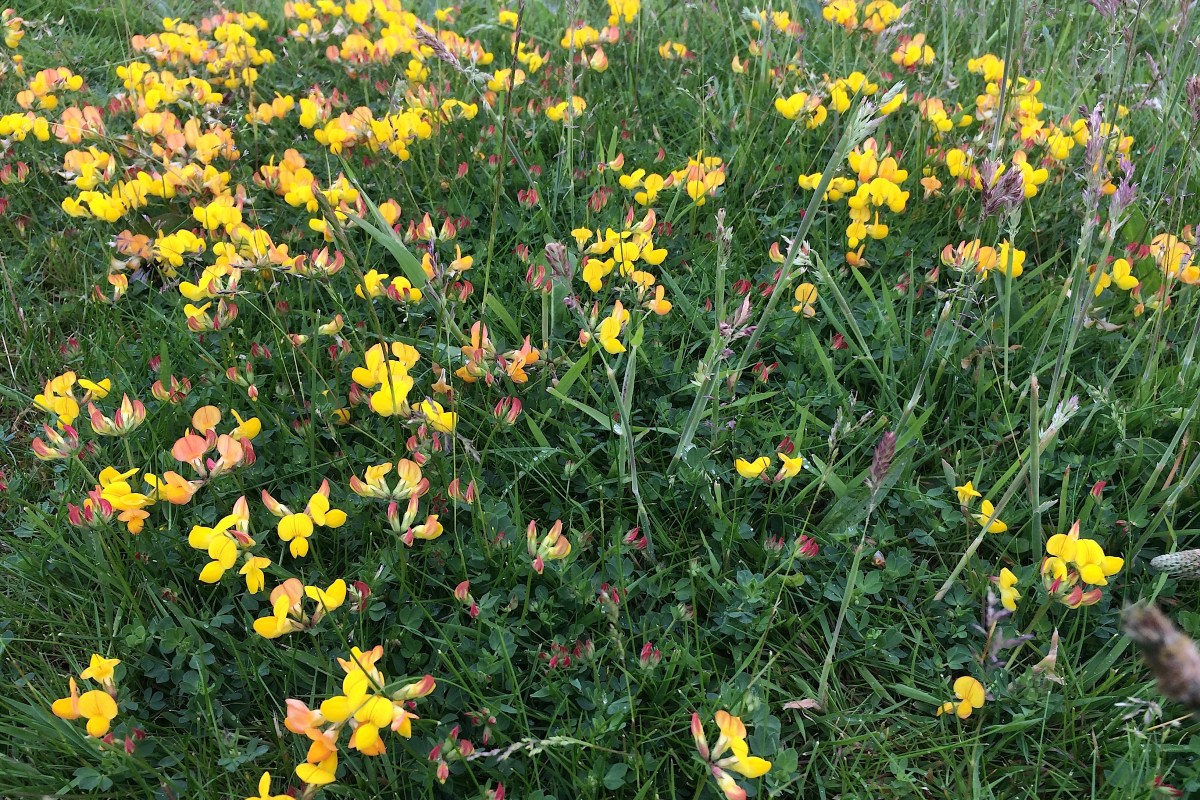
Before we got to the location Sophie had in mind, literally just a few yards from where we work, we noticed beside the path (there is a grass verge) was a patch of Bird’s-foot-Trefoil. I informed Sophie it is also know as Eggs and Bacon. We saw some bees buzzing around it, so we observed and followed them from flower to flower.
I took a short video:
Thanks. 🐝

“Wear a flower behind your ear”
09/06/16
 Today I helped out at Cranesbill Nursery – it’s a lovely company that sells Hardy Geraniums. ‘Cranesbill’ is the common name for a Hardy Geranium, and there were plenty of Bees buzzing around them today. Many of the varieties on the nursery are in flower at the moment, and they are fantastic for creating that rich micro-climate for wildlife in your garden. The plants are very diverse – they come from all over the world – so the good thing about them is that you can literally find one for every part of the garden, and because they come from a variety of climates, by mixing them up within your borders, you can ensure that you have flowers from very early in the growing year, until late Autumn, therefore providing a food source for wildlife for a very long period. So naturally I put a flower behind my ear. 😉
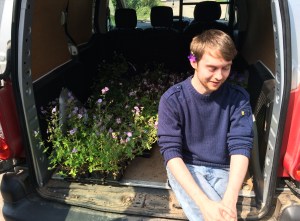
The nursery is located on a farm – just on the edge of South Staffordshire – where I observed Swallows, Skylarks, House Sparrows, baby Rabbits, Moths and Butterflies (as well as the Bees).
Thanks. 🙂
I had a realisation recently, regarding the invertebrates I blogged about back in June… I’ll bee honest 😉 I didn’t think about what the Ruby-tailed Wasp may have been up to, but I was reminded in the September Issue of BBC Wildlife magazine – that they’re a kind of Cuckoo! This jewel-like wasp, happened to be close to where the Mason Wasp was coming and going from!
I only have this poor photo of these amazing Apocrita:

These weeny wasps (with metallic blue/turquoise tops and ruby red bottoms) lay their eggs in the nests of other Solitary Wasps, like the Mason Wasp!
When lava of the Ruby-tailed Wasp hatches, it eats the egg or grub of the host’s nest – which makes these sort of Wasps parasitoid (because they don’t live inside the host, they kill them instead). September’s issue of BBC Wildlife also features “7 WAYS TO SAVE SOLITARY BEES”.
Thanks 🙂
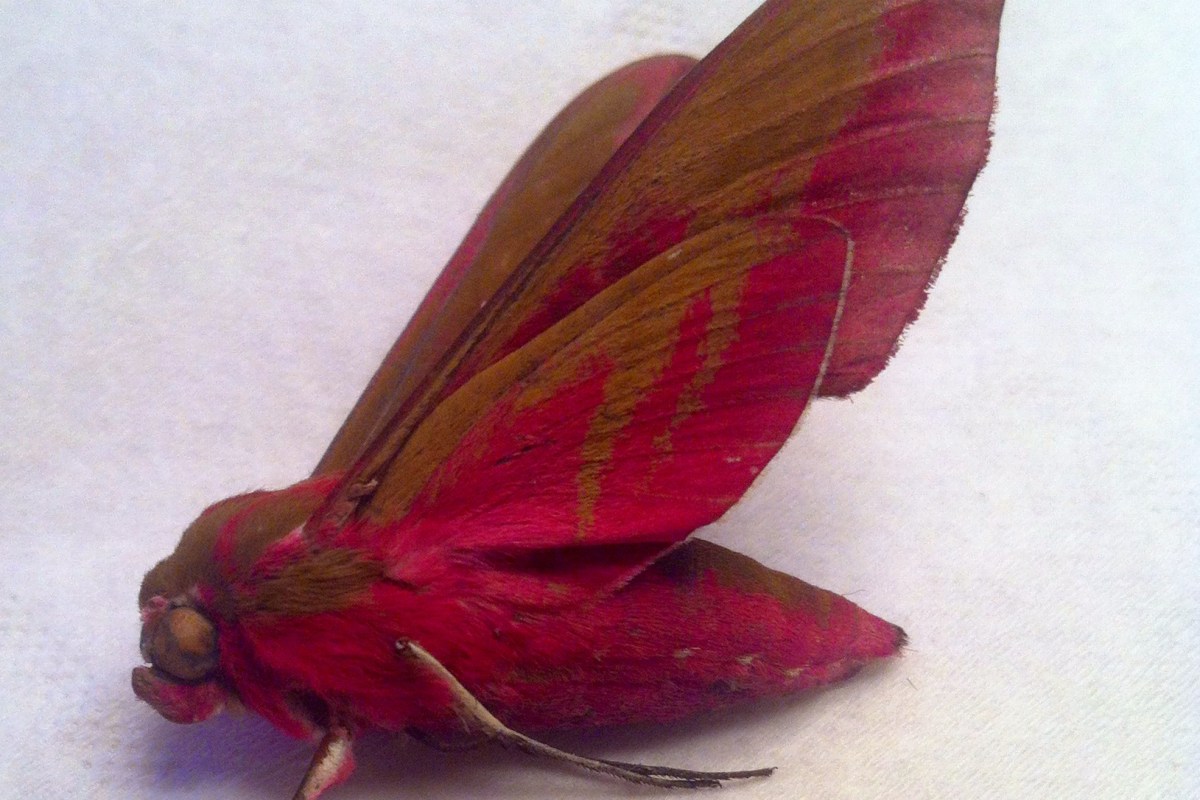
(I’m using my phone to do this blog entry) I was at work early today and had to do a couple errands when I finished, then it rained continuously. I had already danced in the rain.


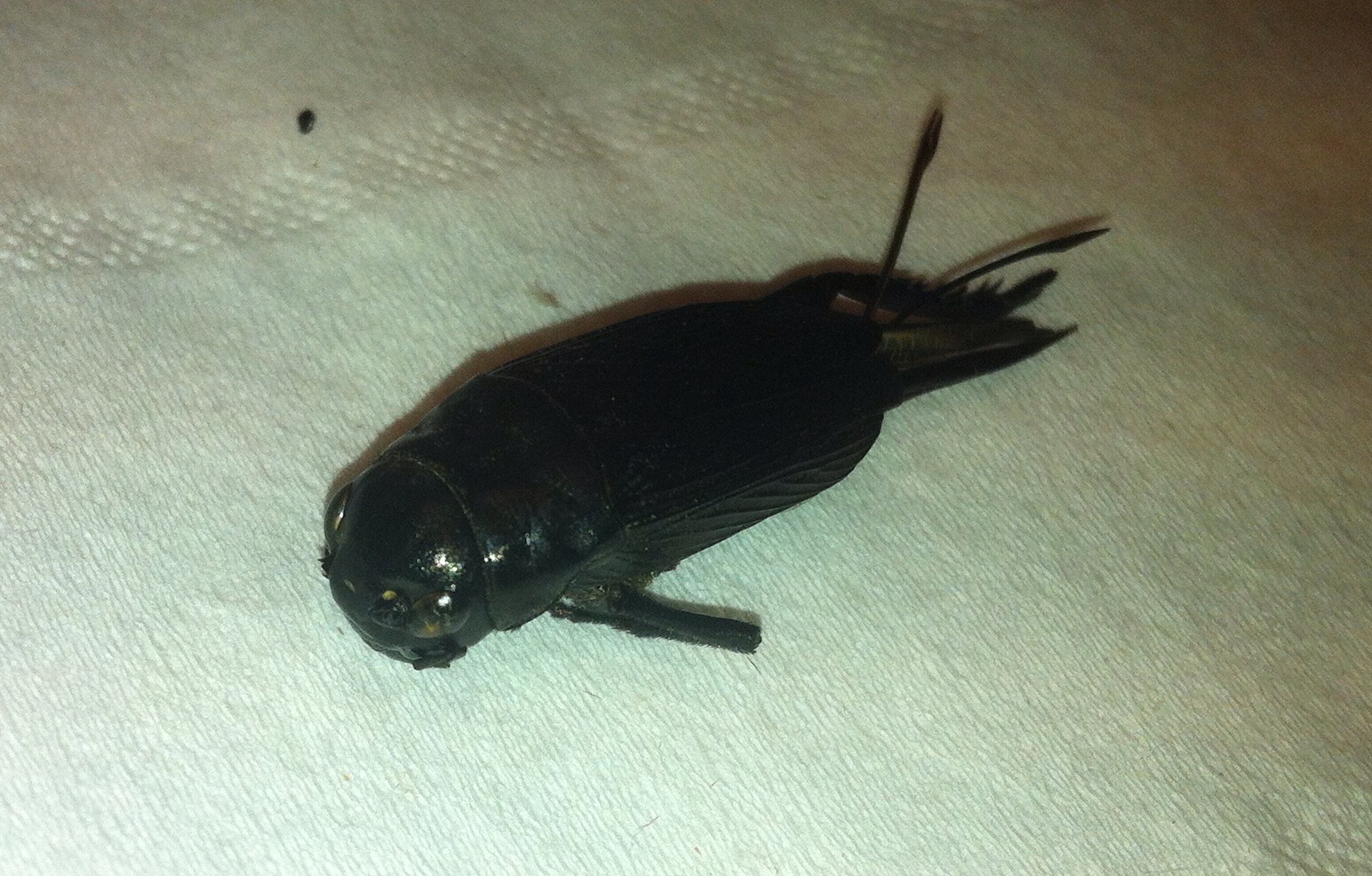
My Dad has came across various creepy crawlies at work, some living and some dead. The Cricket thing is the second specimen he has came home with, below is the first.

Thanks 🙂
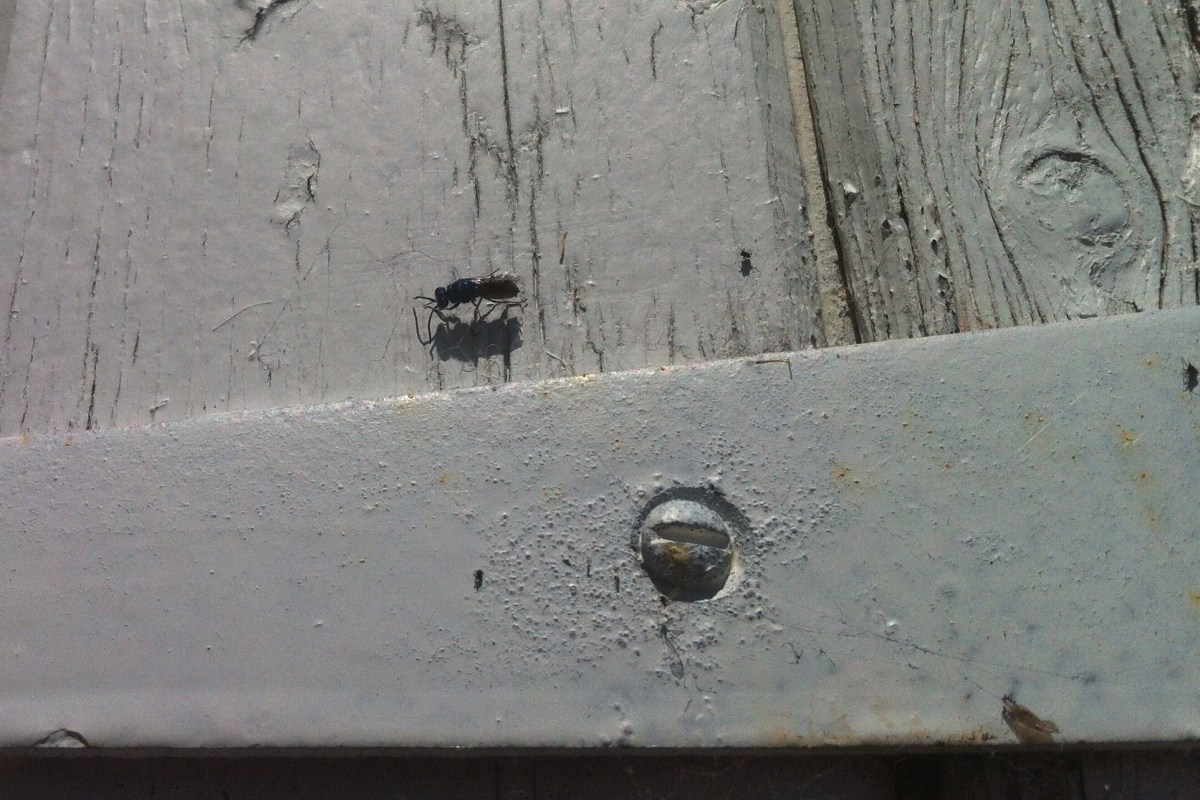
There’s the suggestion to “Follow a bee”, but to cut a long story short; I watched a few insects (no Bees today) after work. What first caught my eye was a wee blue flying one! A Ruby-tailed Wasp to be exact 🙂
Apologies for the poor images (phone snaps again).
Something larger caught my eye and disappeared down the back of the shed door, a Mason Wasp! Which I watched for a short while.
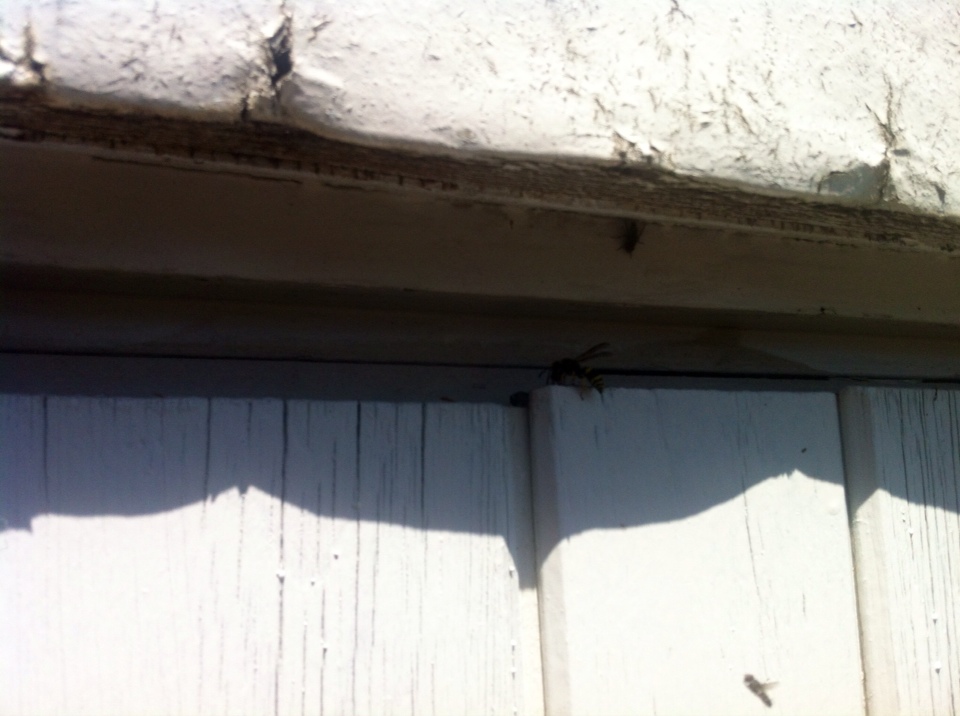

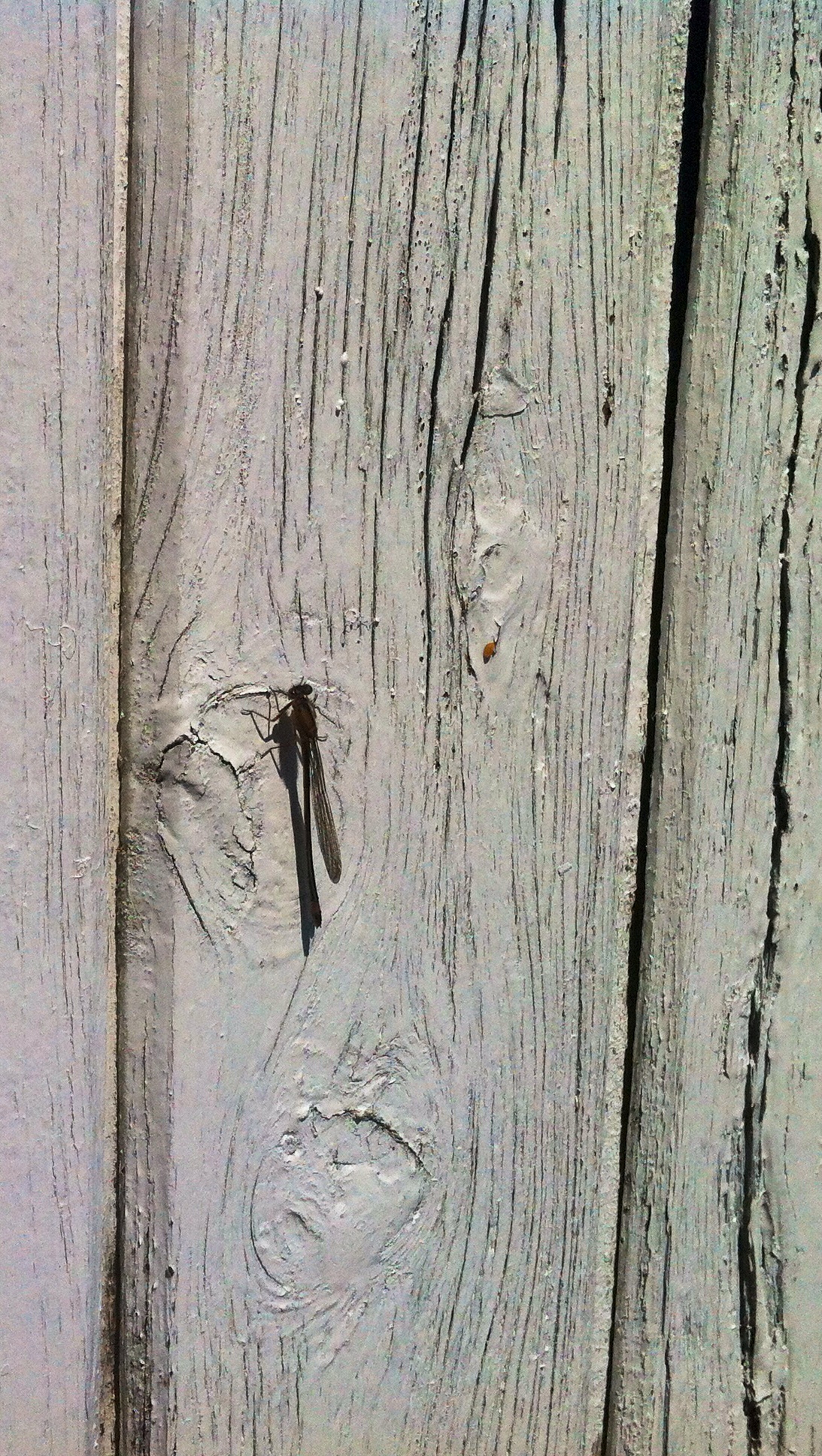
Something landed on my hand and startled me! After all, I was Wasp-watching. I shook it off and it flew on to the shed door, which seems a popular place for flying insects.
A couple clips of the Mason Wasp:
Thanks 🙂
 Canned Wildlife
You must be logged in to post a comment.