I am delighted & amazed at what I am discovering in the garden lately. Today I was pottering about & I could hear a munching / crunching sound coming from the gate.
#30DaysWild
At first I thought it may have been a Wasp, but I couldn’t see it. Then after looking the gate up & down I noticed a wee Bee in a crevice! 🐝
Yesterday I had a wee trip to my local town & I documented how green the journey there is 🏞️
#30DaysWIld
Today I celebrated Father’s Day with some of my family & we had a BBQ, which my Brother-in-law & I tended to 🙂
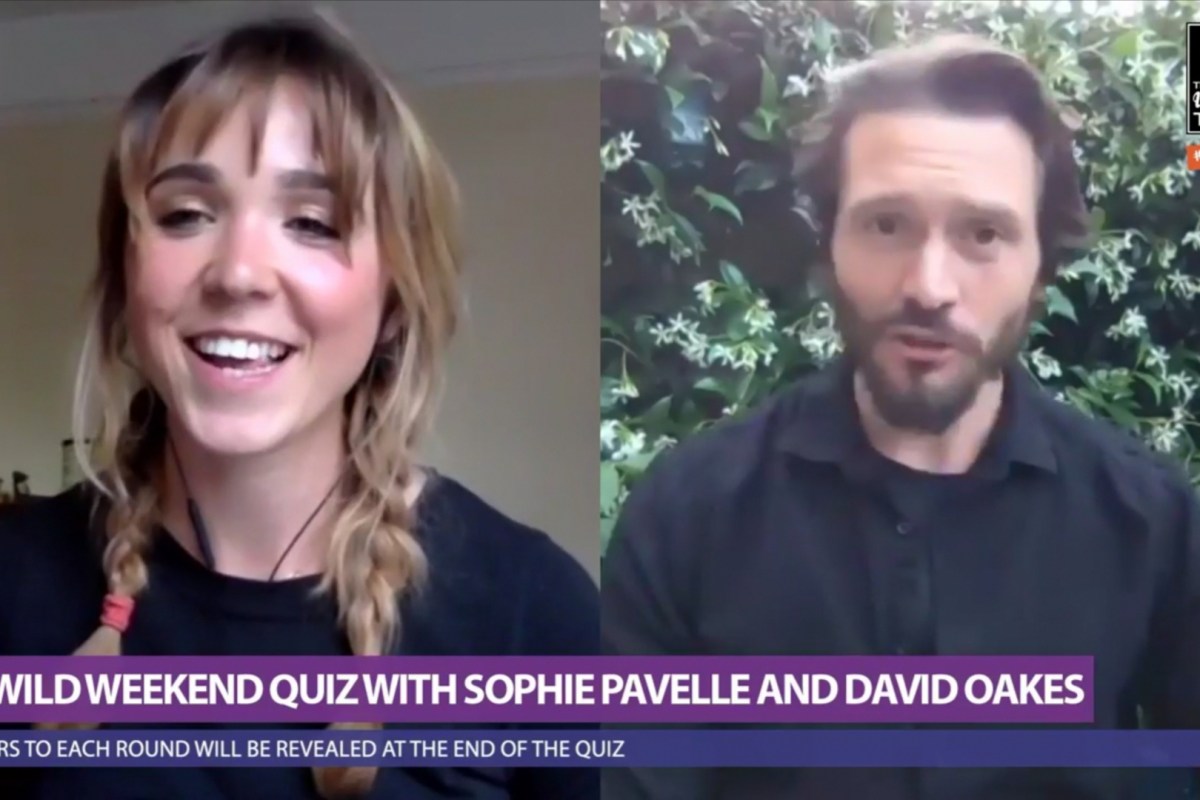
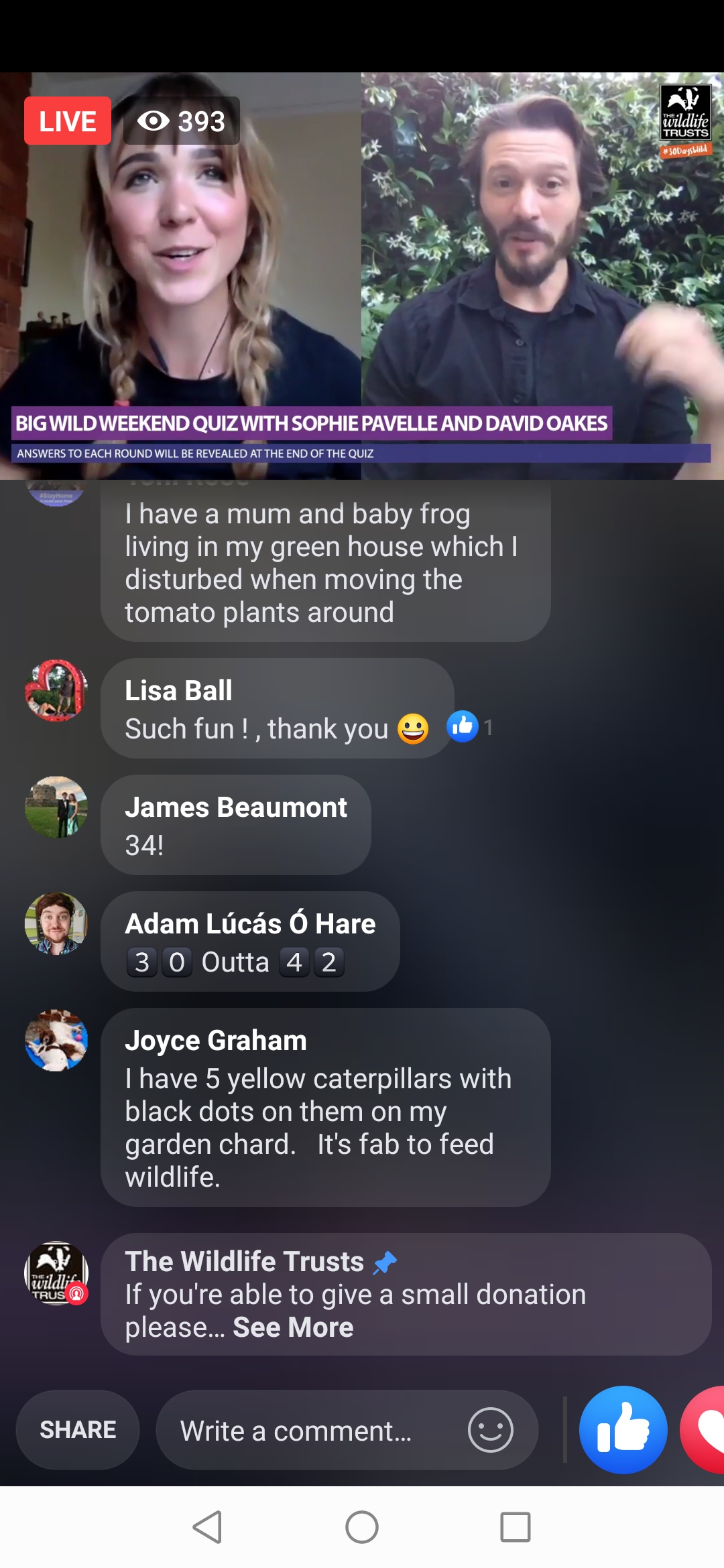
When the evening arrived, it was time to prepare for the Big Wild Quiz, hosted by Sophie Pavelle and David Oakes. Which kicked off just after 7pm, it was great fun & a laugh! 💚
On 28th March (2018) I was out walking with my mum, when I spotted a couple of Nuthatches on the edge of a wood where we were just about to walk through, and I happened to notice that one of them was putting mud around a hole in a tree, as its nest is in the cavity of the tree.
My mum and I was delighted to witness this and were both surprised at how close to the path it was. Recently I purchased my latest video camera – my first semi-professional one – a Canon XF300 and decided I would return on a day with better weather and test it out on the Nuthatches.
On 5th April (2018), the conditions were perfect, so I went to where I observed said behaviour and thankfully the construction was continuing and below is what I filmed:
I had a realisation recently, regarding the invertebrates I blogged about back in June… I’ll bee honest 😉 I didn’t think about what the Ruby-tailed Wasp may have been up to, but I was reminded in the September Issue of BBC Wildlife magazine – that they’re a kind of Cuckoo! This jewel-like wasp, happened to be close to where the Mason Wasp was coming and going from!
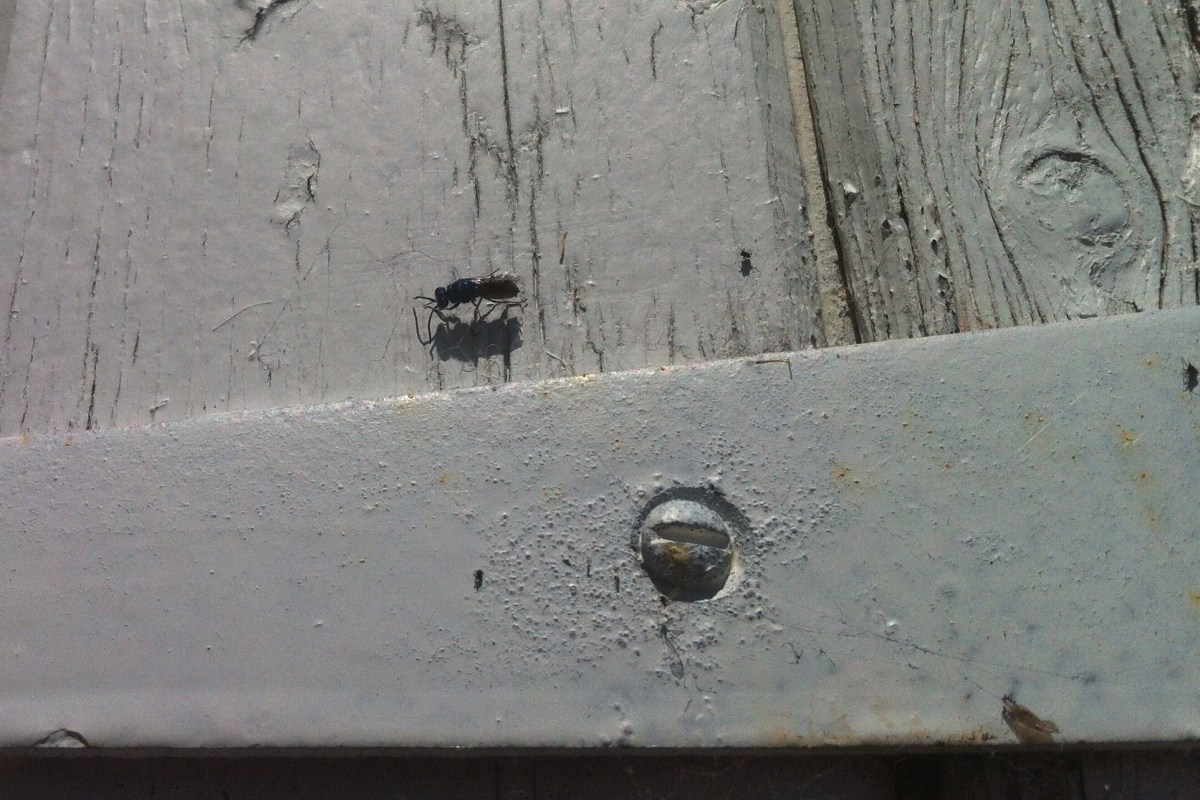
I only have this poor photo of these amazing Apocrita:
These weeny wasps (with metallic blue/turquoise tops and ruby red bottoms) lay their eggs in the nests of other Solitary Wasps, like the Mason Wasp!
When lava of the Ruby-tailed Wasp hatches, it eats the egg or grub of the host’s nest – which makes these sort of Wasps parasitoid (because they don’t live inside the host, they kill them instead). September’s issue of BBC Wildlife also features “7 WAYS TO SAVE SOLITARY BEES”.
There’s the suggestion to “Follow a bee”, but to cut a long story short; I watched a few insects (no Bees today) after work. What first caught my eye was a wee blue flying one! A Ruby-tailed Wasp to be exact 🙂
Apologies for the poor images (phone snaps again).
Ruby-tailed Wasp – blue top and red bottom
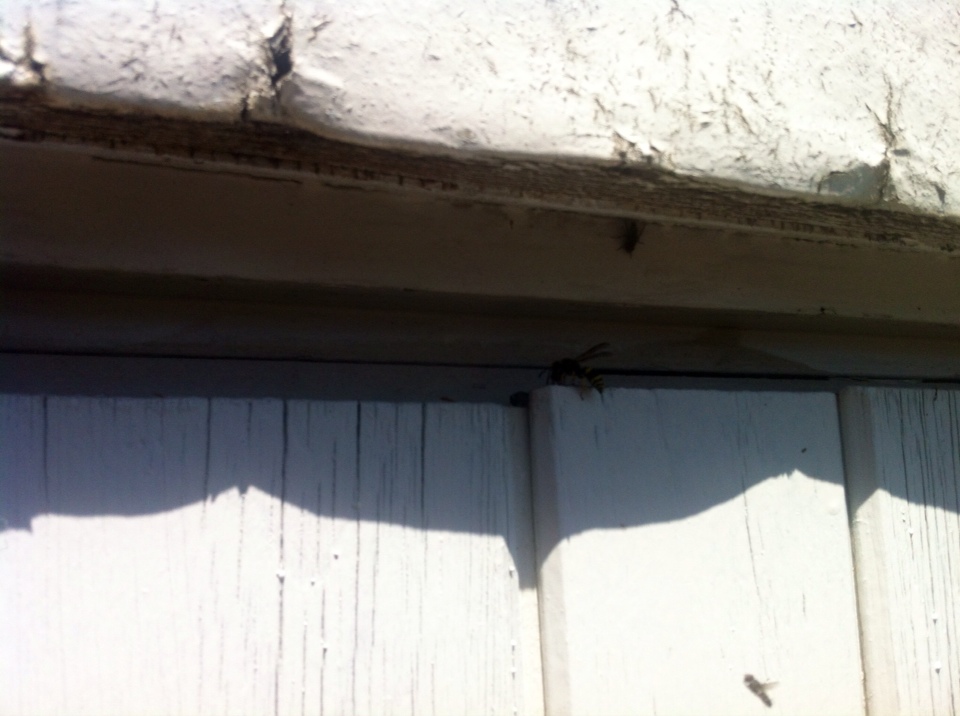
Something larger caught my eye and disappeared down the back of the shed door, a Mason Wasp! Which I watched for a short while.
Mason Wasp
Flies followed it back to the shed, and sat outside
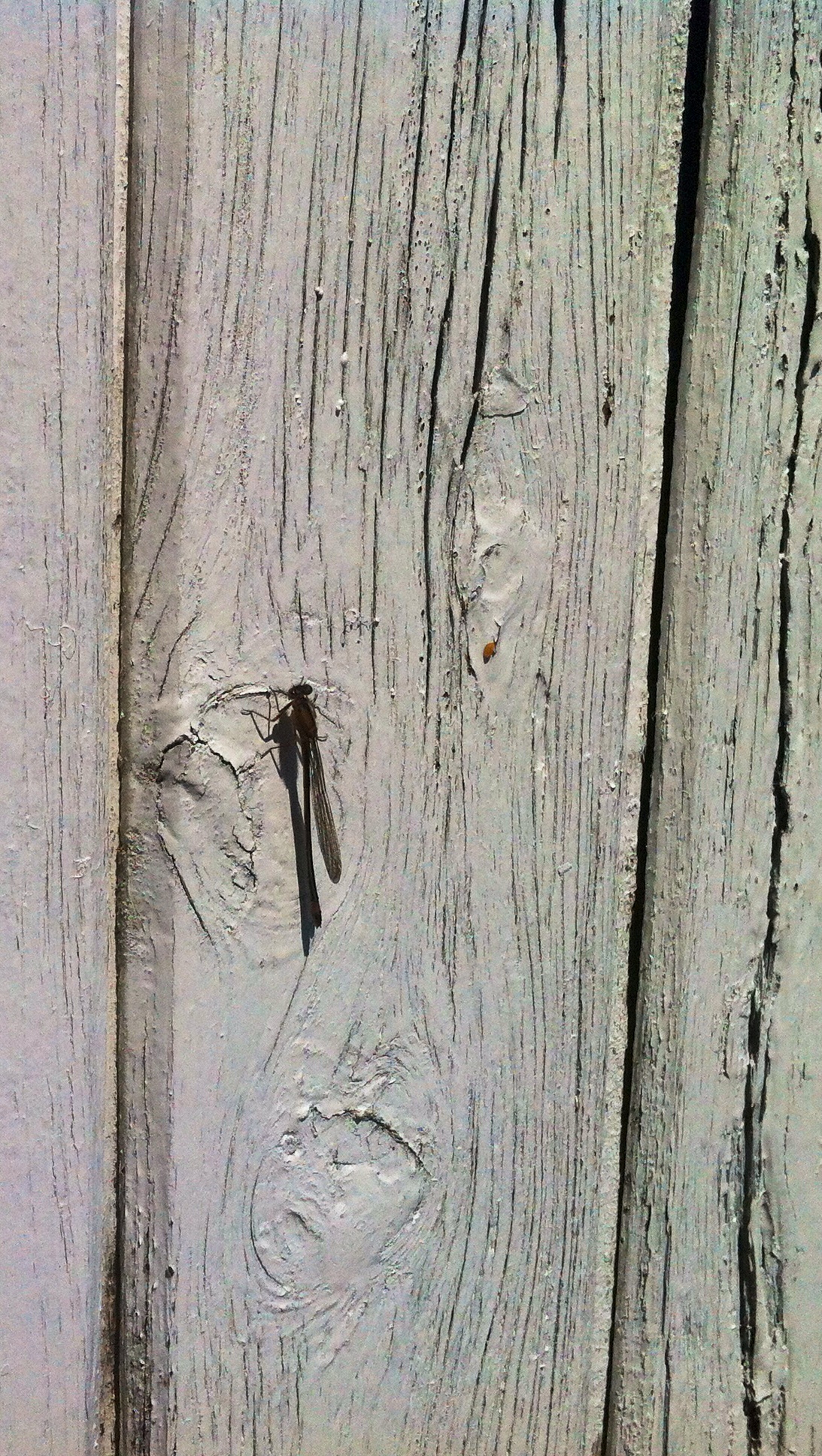
Something landed on my hand and startled me! After all, I was Wasp-watching. I shook it off and it flew on to the shed door, which seems a popular place for flying insects.










 Canned Wildlife
You must be logged in to post a comment.